


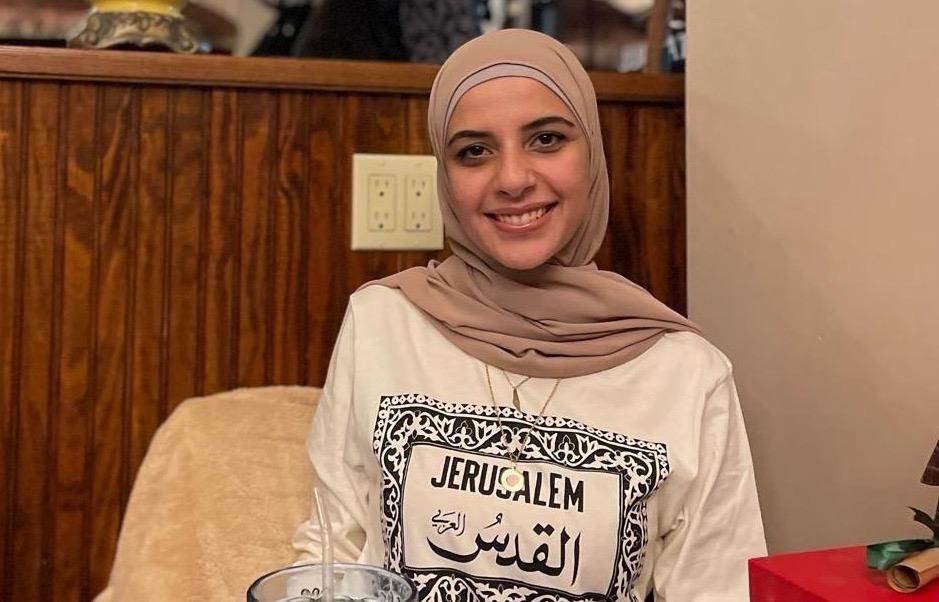
On this International Women’s Day, nearly a year after I was first detained by ICE for speaking out for Palestinian freedom, my thoughts are filled with the women who, like me, are living – surviving – in immigration detention.
Women who wake up every morning unsure when they will see their families again.
Women who hold each other up, because sometimes it is the only support we have.
A woman who gets her period while being transferred to a detention center, while her hands, waist, and feet are shackled so tightly she can’t even lift her arms to scratch her head. The bus doesn’t stop. There is no bathroom. She sits for hours, unable to move, as blood soaks through her clothes.
I think about the woman who is six months pregnant, barely sleeping because of the pain in her back and body. The only “nutritional” food the facility gives her to sustain the new life she carries is a “salad” made of just lettuce. She is afraid to seek medical attention. “Medical is not good.” All you do there is sit on a cold stool in a smelly room until they send you back.
Pregnancy becomes a higher risk here. We are haunted by the knowledge that one of the women before us lost her baby in the bathroom. They deported her the next day.
There are women of all ages here. One grandmother told a judge she would accept never leaving her son’s house, if it meant she could spend her last years with family. “I don’t want to die alone,” she says.
Another woman, in her late 60s, cried every day because she was being deported to a country where she had no address, home, or anyone waiting for her. I tried to tell her it would be okay. Her son and sister would take care of her, send her money. Don’t worry. But at her age, she doesn’t know how to use technology. Her family told us it was really difficult to contact her.
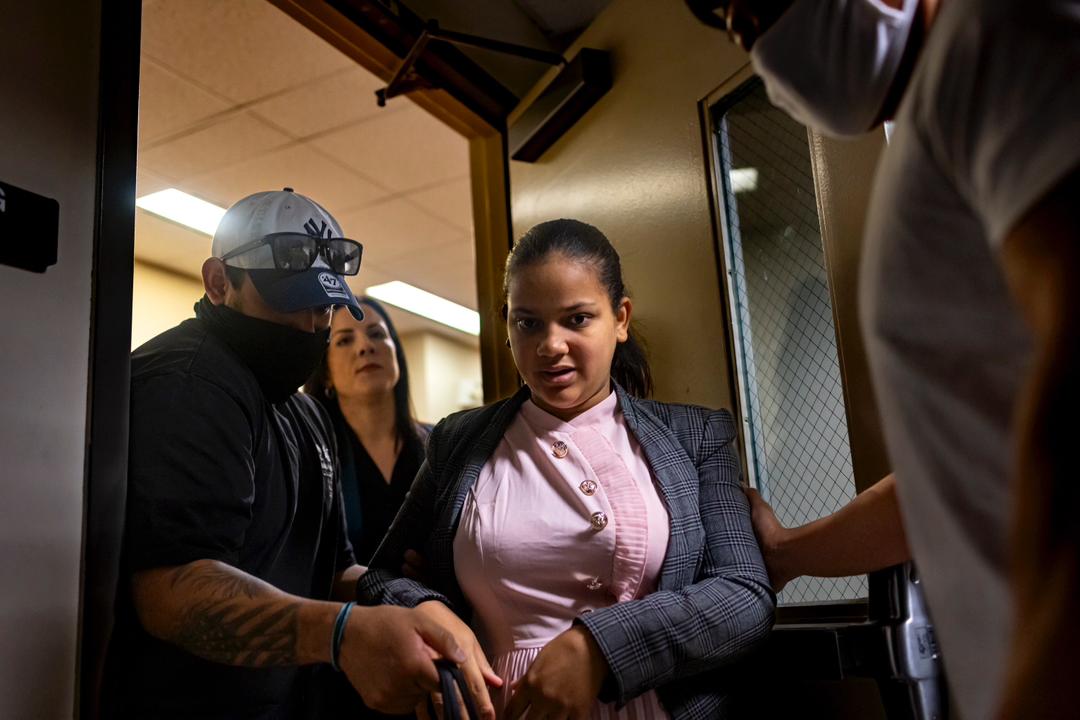
A girl with me hasn’t even turned 18 yet. She’s so innocent, quiet. She doesn’t speak. Another young woman, who has since been deported, was grabbed by an ICE agent from her classroom in front of fellow students.
 One woman here was taken while driving her daughter to school. She had a pending asylum case and work registration. When she asked what she had done wrong, the agents would not answer her. She asked to call her husband and let him know he needed to pick up their daughter. They refused. The school called him at the end of the day when she couldn’t be reached.
This place makes women sick. Those with serious medical conditions are not given proper treatment.
I spent 72 hours chained like an animal in a hospital after experiencing the first seizure of my life. A woman coughed for 10 days straight until her chest and bones hurt. One night, she coughed so much that nobody slept. Facility staff refused to give her cough drops.
One screams in pain every night, “I’m dying, I’m dying,” only to be told by a doctor that there’s nothing wrong with her.
Next week, I will have spent a year in Prairieland Detention Facility, because I attended a protest and called for an end to the ongoing genocide in Gaza – which has killed nearly 200 of my family members.
“Throughout history, women have been taught to stay quiet and shrink our power. The longer they hold me, the more I am reminded how important my story is….Why else would they be so afraid of what we have to say?
The struggle of the Palestinian woman is never-ending. There is no way to measure the grief. A nurse who continues to work at the hospital, saving lives after losing all of her children. Wives separated from their husbands, families torn apart, which is something that happens often in detention, too.
An Immigration judge has now twice ordered my release on bond, but ICE used procedural loopholes each time to keep me confined.
Throughout history, women have been taught to stay quiet and shrink our power. The longer they hold me, the more I am reminded how important my story is. Our voices must matter. Why else would they be so afraid of what we have to say?
DHS insists they are targeting criminals. But all I see here are mothers, sisters, daughters, grandmothers. Some have active green cards. Nevertheless, they are transferred from detention center to detention center. It is human trafficking, by another name.
Women are forced to stay for days in an intake room with no mattresses, no blankets, or pillows. Those who ask for water are told to drink from the bathroom sink. Once they arrive in the dorm, they are already exhausted and hopeless.
 My friendships with the women here help me get through this otherwise unbearable ordeal, both figuratively and literally. When I first arrived, there was no food for me. I was told the kitchen was closed. If it weren’t for the women who shared their meals with me, I might have starved.
Now, I pay the kindness forward. During Ramadan, I get a small luxury: an apple. Each day, I give my apple to a different woman. Yesterday, I gave one to a pregnant woman. Though her English was difficult to understand, I knew that she was craving it. Just a piece of fruit. But she doesn’t have access. She almost cried.
This year, I have a Muslim friend to observe the holy month with me. We pray together, we make Dua together, we break our fast together, and we fight for our religious rights together. Neither of us should be here, but selfishly, I’m grateful not to be alone.
During the holidays, women made small Christmas trees and put them on every bunk. I turned 33 in December. I told everyone not to celebrate my birthday, but – despite that – they gave me a beautiful card. Not just a regular one. They actually spent time making it.
