


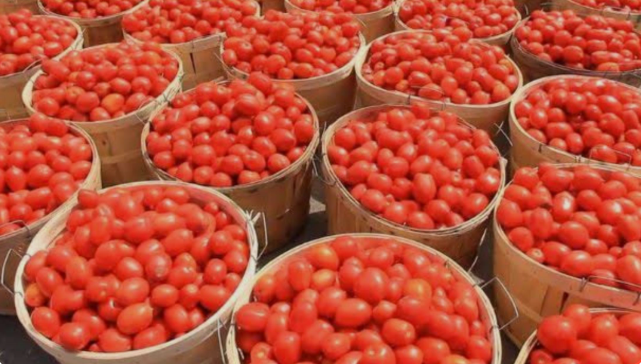
There’s trouble brewing in the tomato business.
In a sweeping move that’s sending ripples across the sub-region, Burkina Faso’s military-led government has ordered an immediate suspension of all fresh tomato exports.
The directive, announced in a joint communiqué dated March 16, 2026, is aimed at protecting local processing industries from supply shortages.
The ban, signed by the Minister of Industry, Serge Gnaniodem Poda, and the Minister of State for Agriculture, Commandant Ismaël Sombie, applies to the entire national territory “until further notice.”
All economic operators involved in exporting fresh tomatoes are affected.
The government has also suspended the issuance of Special Export Authorisations with immediate effect.
For traders holding valid permits, there’s a two-week window to complete pending exports.
After that, all existing authorisations become null and void.
And the consequences for breaking the rules? Severe. Violators will face sanctions, and any seized tomatoes will be handed over, free of charge, to industrial processing units established under Burkina Faso’s popular shareholding framework.
This move is part of a broader push by Captain Ibrahim Traoré’s transitional administration to develop local agro-processing and reduce reliance on raw commodity exports.
It’s a policy direction that’s been gaining steam, and now it’s directly impacting the tomato trade. For Ghana, the timing couldn’t be more critical.
The country depends heavily on Burkina Faso for its fresh tomatoes, an estimated 90% of supply.
Northern Ghana, in particular, relies on cross-border trade flows.
With the taps suddenly turned off, shortages are almost certain, and prices are expected to climb.
Market women, traders, and everyday consumers are already bracing for the impact.
A staple ingredient in Ghanaian cooking, from stews to jollof, could soon become significantly more expensive.
The Burkinabé government has called on all actors in the tomato value chain, along with border control services and security forces, to ensure full compliance.
For now, the border is closed to tomatoes, and Ghana’s markets will have to adjust.
How long the ban will last remains unclear.
What is clear is that your next bowl of stew might come with a higher price tag.
