


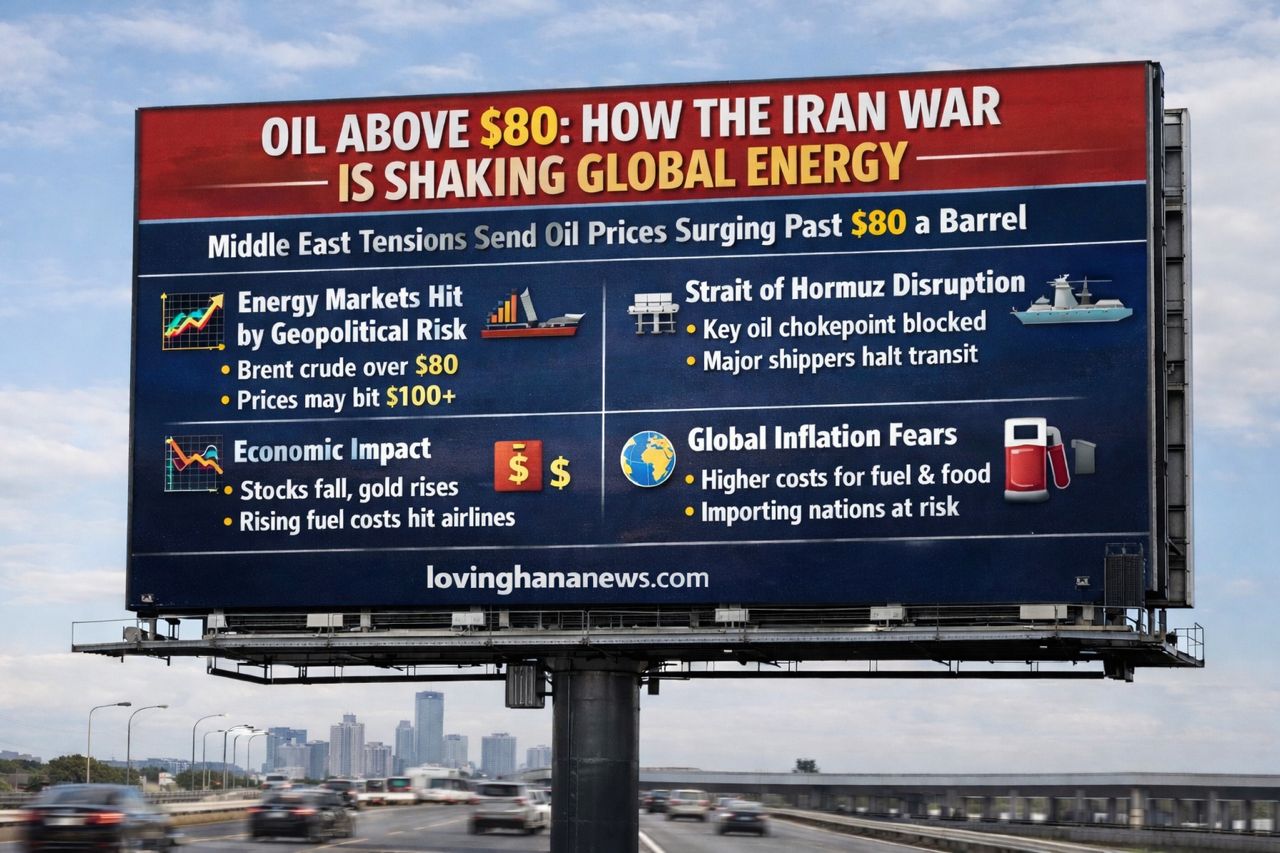
Global oil prices surge above $80 a barrel as the Middle East conflict between the United States, Israel, and Iran intensifies — shaking energy markets and the wider global economy.
Key developments:
Energy markets hit by geopolitical risk
Brent crude oil prices have climbed past $80 per barrel, marking one of the sharpest price jumps tied directly to the Iran conflict. Analysts warn prices could move toward $100 or more if supply disruptions persist.
The price rise reflects intense risk pricing by traders as global oil supply routes face threats.
Strait of Hormuz disruption
The crisis has centered on the Strait of Hormuz, a crucial chokepoint through which roughly 20 % of the world’s oil trade transits. Attacks and threats of closure have effectively halted tanker traffic and raised the specter of supply shortages.
Major shipping firms have suspended crude and LNG shipments through the strait due to safety and insurance concerns.
Broader market and economic effects
• Global stock markets have sold off amid risk‑off sentiment, while safe‑haven assets like gold climbed.
• Airlines and energy‑intensive sectors are facing rising fuel costs as oil and gas prices rise sharply.
• Some oil exporters, such as Russia and national oil companies, are seeing short‑term gains due to elevated prices.
Global implications
• Higher oil prices are expected to feed into consumer inflation, affecting fuel, transportation, and potentially food and commodity prices worldwide.
• Countries reliant on oil imports, especially in Asia, face heightened vulnerability if disruptions continue.
The Iran conflict has rapidly morphed into a major energy shock, with crude oil surging past $80 a barrel as fears mount over supply disruptions via the Strait of Hormuz. Markets are reacting to heightened geopolitical risk, and analysts warn that prolonged instability could push prices even higher — with broad ramifications for inflation, trade, and the global economy.
