


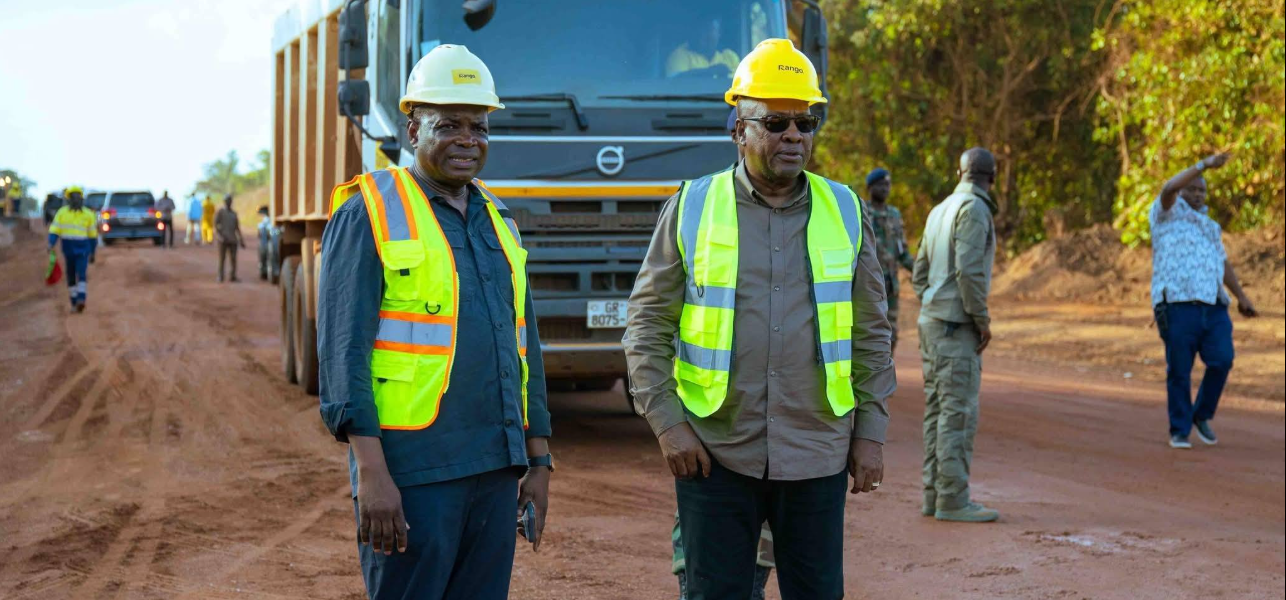
This visit constitutes a key component of his administration’s broader strategy to ensure efficient execution of critical infrastructure while maintaining direct engagement with citizens.
During the inspection, the President met with traditional authorities, including chiefs, queen mothers, and community leaders, as well as residents of the area, to assess progress on the project and gather firsthand feedback on its impact.
He expressed appreciation for the warm reception and reiterated his government’s commitment to transparency, accountability, and inclusive governance.
Highlighting the state of the economy, the President stated that Ghana is witnessing signs of stabilisation, with inflation declining significantly and the cedi strengthening against major foreign currencies.
President John Dramani Mahama has conducted an inspection of the 80-kilometre Jinijini-Sampa Road project in the Berekum West District as part of his nationwide “Resetting Ghana Tour.” pic.twitter.com/ZOAsY8h6Ns
— LOVIN GHANA TV (@lovinghanaTV) March 19, 2026
He emphasised that renewed investor confidence and increasing foreign direct investment are essential to sustaining economic growth and improving livelihoods.
On infrastructure, President Mahama underscored the critical role of quality road networks in facilitating trade, enhancing mobility, and driving regional development.
He assured residents that the Jinijini–Sampa Road, which has faced longstanding challenges, will be completed to full asphalt standards by the end of 2027.
The President further outlined key flagship initiatives under his administration, including the Big Push, Mahama Cares, Nkoko Nkitinkiti, and the 24-hour market programme, aimed at stimulating economic activity and creating employment opportunities nationwide.
He referenced the recent sod-cutting ceremony for a 24-hour market in the region as part of efforts to support local traders and expand commerce.
Concluding his remarks, President Mahama encouraged citizens to participate in the upcoming stakeholder engagement in Sunyani, stressing that public feedback remains vital to shaping responsive policies and advancing national development.
