


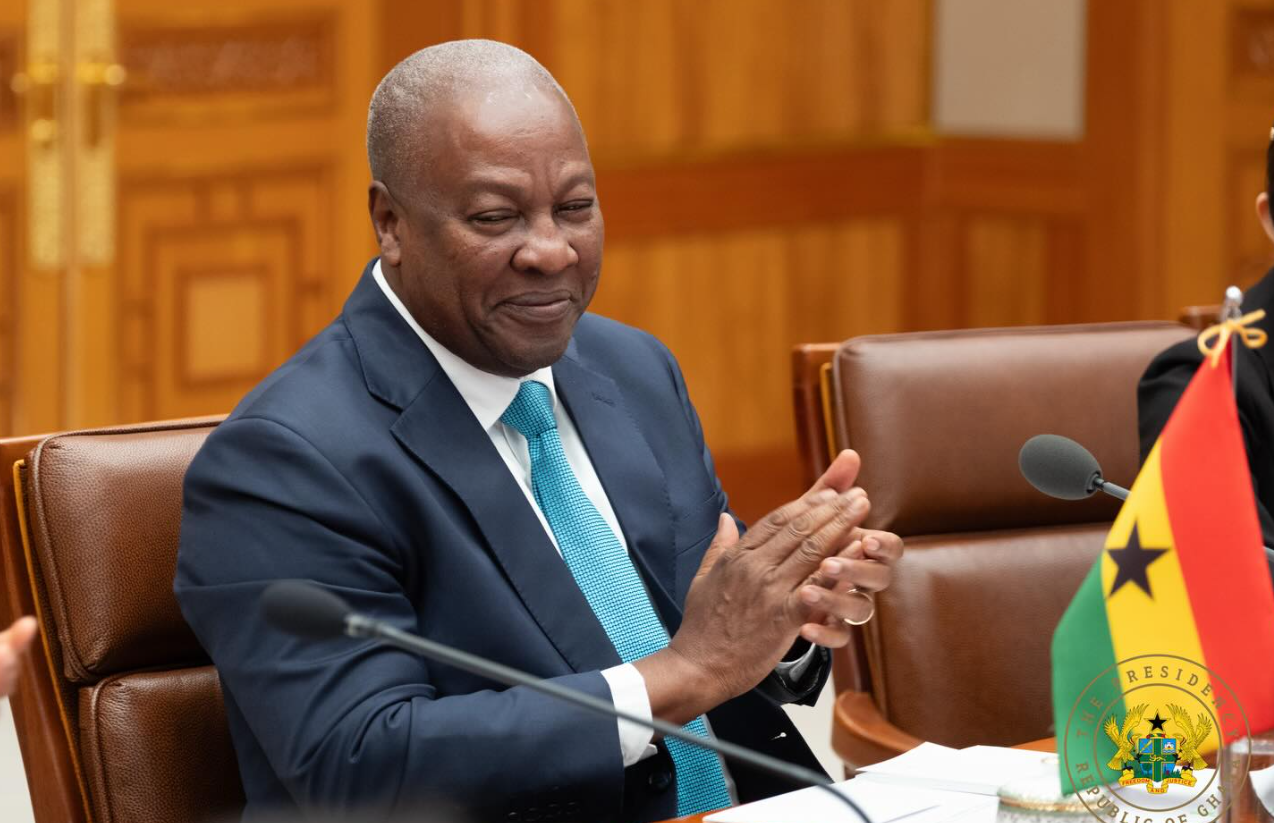
The University Teachers Association of Ghana (UTAG) has reminded President John Dramani Mahama of their petition against the current leadership of the Ghana Tertiary Education Commission (GTEC).
On 17th February 2026, UTAG submitted a petition to the Presidency over concerns regarding what they describe as a persistent pattern of regulatory overreach, unilateral directives, and a coercive administrative posture by the current leadership of the Ghana Tertiary Education Commission.
UTAG said their considered assessment is that these governance failures have departed from the regulator’s enabling purpose and now undermine university autonomy, academic freedom, staff welfare, and the stability and competitiveness of Ghana’s public universities.
In the said petition, they drew the President’s attention to the above worrying developments within the tertiary education landscape and the need for a swift action to safeguard the autonomy of our public universities.
But they said in a statement on Monday April 13 that” it has been almost two months since the submission of our petition and we are yet to even receive an acknowledgment to our petition, which is rather unfortunate and contrary to the perceived goodwill UTAG believes the current government bears towards us and our concerns.
“At this point, we have no option than to believe that our petition was not processed for the attention of His Excellency the President or the President has just ignored our petition and refused to acknowledge same. We have therefore convened this press conference to make public our demands and also for the President to be apprised of same, just in case it has not been brought to his attention.”
1. Summary of UTAG’s core case
UTAG said their petition for the removal of the leadership of GTEC is not a move against regulation per se. Rather, they said they object to regulatory overreach exercised without consultative leadership, resulting in a system that is more command-and-control than facilitative, and more centralized than subsidiarity-based. In UTAG’s assessment, the current leadership of GTEC has increasingly substituted its judgment for that of University Councils and Academic Boards. This runs contrary to first principles of higher-education regulation. Internationally, regulators are expected to set minimum standards (not micromanage institutions), protect the public interest (not substitute for university councils), enable academic excellence and innovation (not standardize mediocrity), operate through consultation (not fiat), and respect institutional autonomy— especially for public universities established by Acts of Parliament and governed by statutory councils. Where a regulator departs from these principles, it risks governance paralysis, blurred accountability, and avoidable industrial tension, phenomena which are becoming increasingly obvious in our sector.
2. Particulars of Regulatory Overreach and Governance Failures
UTAG records the following patterns, among several others:
• Systematic interference in internal university governance and administration, including the usurpation of powers vested in University Governing Councils and Academic Boards;
• Imposition of prior-approval requirements over appointments, post-retirement engagements, and internal administrative positions that fall within university authority;
• Overriding of legitimate Council decisions taken pursuant to university statutes and enabling Acts of Parliament;
• Assumption of excessive discretionary powers, including threats to withdraw accreditation and subvention as coercive regulatory tools;
• Abrupt scrapping of established office-holding portfolios across campuses without due process or meaningful stakeholder consultation.
3. Directives on Retirement and Post-retirement Contracts
UTAG reiterates its rejection of GTEC circulars and policy directives issued in September and October 2025 on post-retirement contracts, and salary/payment procedures. UTAG’s key objections are that these directives: (i) contradict negotiated Conditions of Service for Senior
Members; (ii) seek to transfer post-retirement approval authority from University Governing
Councils to GTEC despite GTEC not being the appointing authority; (iii) introduce retroactive uncertainty that violates legitimate contractual expectations and exposes universities to legal and
financial liability; and (iv) create administrative bottlenecks that disrupt academic delivery, worsen staffing shortages, and undermine teaching, research, and mentorship continuity. UTAG
underscores that post-retirement engagement for its cadre of members has been a negotiated and lawful mechanism to address capacity gaps in public universities.
4. Undermining Labour Relations and Staff Welfare
UTAG further notes unilateral variation and selective implementation of negotiated Conditions of Service, including issues affecting research fellows and librarians on various campuses, as well as salary clearance and payment delays for legitimately engaged staff. These practices undermine good-faith collective bargaining, strain labour relations, and heighten the risk of avoidable industrial instability across the public tertiary education sector.
5. Demonstrated Systemic Harm and Reputational Risk
https://lovinghananews.com/no-payment-required-government-says-only-national-id-needed-for-free-primary-healthcare/
The cumulative impact of these practices by the leadership of GTEC has been governance paralysis, weakened Council authority, blurred accountability lines, and heightened sector tension. UTAG also notes the reputational and operational risks created when essential services and accreditation-related processes are used as punitive instruments. By way of example, in September 2025, GTEC withdrew key services to the University of Cape Coast (including the processing of accreditation requests and other essential services) and subsequently restored those services following evidence of compliance with its orders. Episodes of this nature create uncertainty for students, staff, international partners, and funders, and risk undermining confidence in Ghana’s higher-education brand. In particular, that UCC dis-accreditation and reaccreditation saga holds very negative and long-term implications for external funding collaborations, and very much at variance with part of GTEC’s core mandate to act as an agency for channelling external assistance and funding to public tertiary education institutions.
6. Exhaustion of Engagement
UTAG would like to indicate that it has pursued engagement and dialogue with the current GTEC leadership on these concerns. However, UTAG’s concerns have not been adequately integrated into subsequent regulatory action, and the pattern of unilateral directives has persisted.
7. Reliefs Sought
In light of the foregoing, UTAG respectfully calls on His Excellency the President for the following reliefs:
1. That the Director-General and Deputy Director-General of GTEC be removed/relieved of their current roles in order to restore confidence in the tertiary education sector and reset regulatory posture;
2. That Government urgently operationalizes the Education Regulatory Bodies Act, 2020 (Act 1023) through a clear and unambiguous Legislative Instrument (LI), including mandatory consultative rule-making, clear limits on interference in internal governance, and a transparent appeals mechanism against regulatory decisions;
3. That the GTEC directives/circulars dated 30 September 2025 and 1 October 2025 be withdrawn with immediate effect and subjected to structured stakeholder consultation and harmonization with existing legal frameworks and negotiated Conditions of Service;
4. That all existing post-retirement contracts entered into prior to the said directives be protected and allowed to run their full course without interference;
5. That UTAG be included in the consultative process to finalize the LI for Act 1023 and any amendments to the Act; and
6. That the status quo on academic-year rollover for regular teaching and non-teaching staff be maintained pending the conclusion of lawful consultative and regulatory processes.
UTAG said they remain committed to constructive engagement, dialogue, and genuine reform in the public interest.
We are by this press statement serving notice that if appropriate actions are not taken to satisfactorily address our demands within fourteen days from today, we shall, after further consultation with our rank and file, advise ourselves accordingly.
Free Primary Health Care Programme will begin in 150 underserved Districts – Health Minister
