


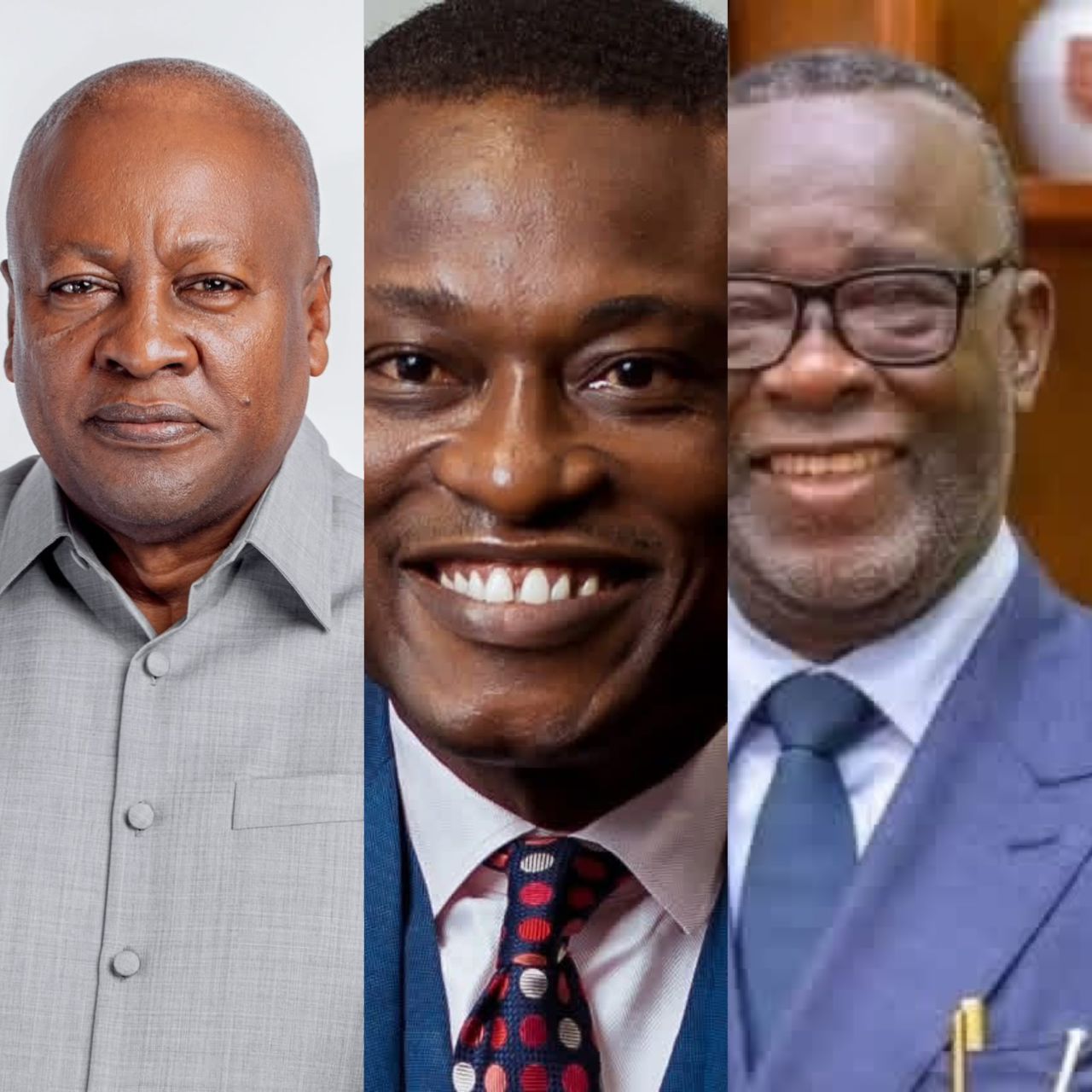
.Intervene in repeal, but petitions hang around Kissi Agyeben
President John Mahama, appears to be manoeuvring cleverly with the Office of the Special Prosecutor by maintaining Act 2017 (Act 959) in force; however, he has Special Prosecutor Kissi Agyebeng, being scrutinized by the Chief Justice, Paul Baffoe-Bonnie, over his continued tenure in office.
Mr Agyebeng’s name was among ten petitions the President recently received, among the petitions, ten are calling for his removal, the rest are for the removal of the Chairperson of the Electoral Commission (EC), Jean Mensa, and her two deputies, Samuel Tetteh and Bossman Asare.
Interestingly, the President intervened yesterday, urging Majority Leader, Mahama Ayariga and Majority Chief Whip, Rockson-Nelson Dafeamekpor, to withdraw their Private Member’s Bill seeking to abolish the OSP, thereby separating the OSP from its head.
The Centre for Democratic Development (CDD-Ghana) has since praised Mr Mahama’s opposition to efforts to repeal the Office of the Special Prosecutor (OSP) Act, describing it as a strong indication of his commitment to combating corruption.
The petitions, including those against Kissi Agyebeng, were submitted by private citizens claiming various forms of misconduct, incompetence, and abuse of office.
Under Section 16 of the Office of the Special Prosecutor Act 2017 (Act 959), any petition for the removal of the Special Prosecutor must be assessed to determine whether it meets the constitutional threshold for further action.
The Act also states that a person seeking the removal of the Special Prosecutor must submit a petition to the President. It further specifies that upon receiving the petition, the President is required, within seven days, to refer it to the Chief Justice, who must then, within 30 days, determine whether a prima facie case has been established.
If a prima facie case is established, the Chief Justice must, within 14 days, form a three-member committee composed of: a chairperson who is a Justice of the Supreme Court; a lawyer with at least 15 years’ standing at the Bar; and one other person with expertise in investigations.
The Committee is then required to investigate the matter within 90 days and submit its recommendations to the President via the Chief Justice.
The President is bound to act in accordance with the Committee’s recommendations. Mr Agyebeng has served as Special Prosecutor since 2021, succeeding Martin Amidu, Ghana’s first Special Prosecutor.
Opinions remain divided on the effectiveness of the Office. While some argue that the OSP has introduced a necessary layer of accountability in public life, others contend that the institution has fallen short of its mandate.
For example, in the Ofori-Atta extradition case, Legal practitioner Martin Kpebu accused Agyebeng of “extreme incompetence” for allowing former Finance Minister Ken Ofori-Atta to leave Ghana while under investigation, suggesting this inaction undermines the credibility of the OSP.
Also, Lawyer Kweku Paintsil has recently criticized the OSP’s frequent press briefings, calling them “highly unprofessional” and accusing the Special Prosecutor of effectively conducting trials in the court of public opinion rather than through the formal legal process.
In 2023, an Accra High Court judge rebuked the OSP, stating that by making certain claims in its affidavits, the office acted as if it had appellate jurisdiction over the court, a “clear abuse of power,” according to the judge.
Also, Special Prosecutor Martin Amidu described Agyebeng as “pathologically dishonest” and “unfit” for his role, specifically criticizing his public statements about the Strategic Mobilisation Ghana Limited (SML) case.
The petitions for the removal of the Chairperson Jean Mensa and her two deputies, Eric Bossman Asare and Samuel Tettey, centered on how the commission was run and the need for accountability at the highest levels.
On Thursday, Dr Kojo Pumpuni Asante, Director of Advocacy and Policy Engagement at CDD-Ghana, welcomed the President’s intervention, urging Majority Leader Mahama Ayariga and Majority Chief Whip Rockson-Nelson Dafeamekpor to withdraw their Private Member’s Bill proposing the abolition of the OSP.
Dr Asante rejected claims that the OSP has failed in its mandate, noting that the available evidence indicates measurable progress. “We welcome the President’s intervention. I disagree with the narrative that the OSP’s performance has been poor; the evidence does not support that claim. Concerns about the constitutionality of the office should be addressed in the upcoming constitutional review, not used as grounds for scrapping it,” he said.
He added that President Mahama’s stance underlines the importance of maintaining robust accountability institutions. “The President has shown consistency in supporting the office and reaffirmed the need for an anti-corruption framework that delivers real accountability for Ghanaians,” Dr Asante stressed.
President Mahama’s remarks followed public concern over the proposed repeal. Speaking at the National Peace Council earlier, he described the move as premature and warned that dismantling the OSP would undermine ongoing anti-corruption efforts. He encouraged the Special Prosecutor to improve operational efficiency and expedite investigations to restore public confidence.
However, the First Deputy Minority Whip, Habib Iddrisu, has criticised the President for intervening in parliamentary business, describing it as “executive control” over the legislature. Speaking in Parliament on Thursday, 11 December, he argued that the President had exceeded his constitutional limits.
“Mr Speaker, because of inadequate releases to Parliament and the executive wanting to control Parliament, now the President is dictating to Members of Parliament. When the Majority Chief Whip and Majority Leader intend to file a Private Member’s Bill, the President is telling them to withdraw it,” Mr Iddrisu said.
A statement from the Presidency, signed by Felix Kwakye Ofosu, Spokesperson to the President and Minister for Government Communications, confirmed the directive. “President John Dramani Mahama has requested the Majority Leader and Majority Chief Whip in Parliament to withdraw the Private Member’s Bill tabled for the repeal of the Act establishing the Office of Special Prosecutor,” it said.
The President, during a courtesy call at Jubilee House, argued that it is too early to abolish the OSP, emphasising its pivotal role in Ghana’s anti-corruption framework. “People believe the Attorney General may be reluctant to prosecute his own. But with an independent office like the OSP, it won’t matter who you are, because they have security of tenure and the prosecutorial authority to act,” he said.
President Mahama urged the OSP to accelerate its investigations to demonstrate its continued relevance. His intervention follows renewed calls from Majority Leader Mahama Ayariga for the OSP’s abolition, citing perceived failures eight years after its establishment.
Speaking to Citi News on Thursday, 11 December, Yusif Sulemana, MP for Bole-Bamboi and Deputy Minister for Lands and Natural Resources, supported the President’s position, describing it as a timely expression of opinion rather than an attempt to control Parliament.
“There was some emotional reaction, but the President is urging caution. Let us assess whether the OSP is meeting its objectives, examine expenditure and outcomes. If it is effective, it should continue; if not, then Parliament can take an informed decision,” Mr Sulemana said.
Meanwhile, legal analyst Kisi Agyabeng has emphasised that the OSP remains the only anti-corruption institution with full prosecutorial independence in Ghana. In his view, calls for its repeal are premature, noting that strengthening the office rather than dismantling it would better serve national anti-corruption efforts.
Source:radiotamaleonline
