


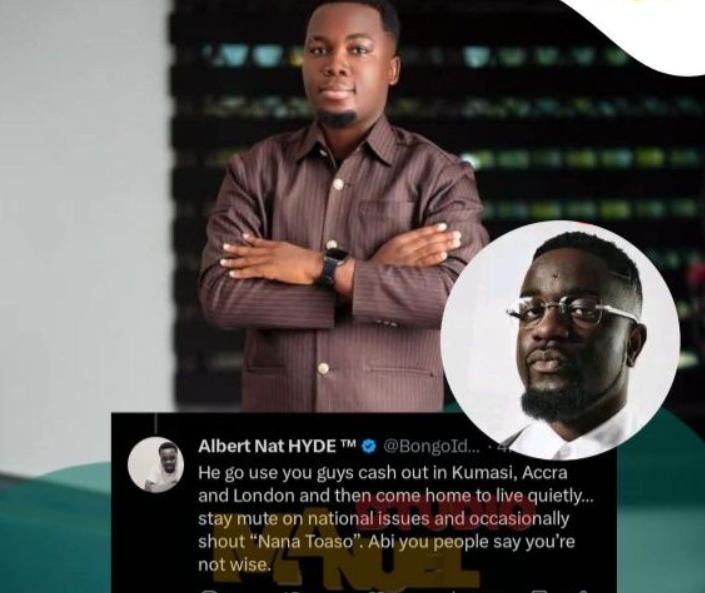
His lament is not rooted in envy or personal vendetta, but in what he describes as a missed opportunity of historic proportions. According to Bongo Ideas, Sarkodie has benefited immensely from the loyalty, struggles, and aspirations of Ghanaians, yet has largely chosen commercial success and personal enrichment over consistently addressing the deeper national issues that weigh heavily on the very people who elevated him.
From this perspective, Sarkodie’s lyrical prowess and influence place him in a rare position one where music can do more than entertain or dominate charts. Bongo Ideas argues that in a country grappling with youth unemployment, economic hardship, governance challenges, and social inequality, the voice of an artist of Sarkodie’s stature should be sharper, bolder, and more confrontational toward systemic
Failures. Instead, he suggests that much of Sarkodie’s catalogue prioritizes brand building, endorsements, and global appeal, while only occasionally touching national issues, often in a safe or indirect manner.
Siding with Bongo Ideas, this critique reflects a broader frustration shared by many Ghanaians who believe that cultural icons owe the nation more than symbolic gestures. It is not a denial of Sarkodie’s hard work or talent, but a call for responsibility proportional to influence.
In societies like Ghana, where musicians often serve as the loudest voices of the streets, silence or selective commentary can feel like complicity. Bongo Ideas’ lament, therefore, is less an attack and more a challenge: that Sarkodie, having gained so much from Ghana, should consistently use his art to confront uncomfortable truths, inspire civic consciousness, and give voice to the frustrations of ordinary Ghanaians, not just when it is convenient, but when it truly matters.
