


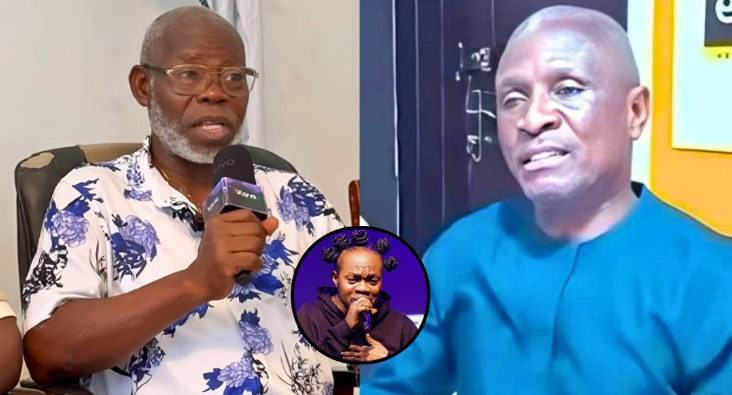
A brewing controversy over the final resting place of legendary Ghanaian musician Daddy Lumba has taken a new turn, with traditional authorities stepping forward to set the record straight on the customs surrounding death and burial in the Ga State.
Rev. Ankrah, the spokesperson for the Gborbu Wulomo-Shitse, has issued a strong statement clarifying that both Ghanaian law and Ga-Dangbe traditions strictly prohibit burying a person within a residential home.
According to him, the family of the music icon cannot simply proceed with such plans without first pacifying the gods, and even then, permission may not be granted.
Speaking to the press, Rev. Ankrah laid out the spiritual, environmental, and legal reasons why burying the dead at home is unacceptable in Ga culture.
“Spiritually, it is considered unclean to have a dead body buried close to our deities,” he explained.
“We do not permit that, and the spirits around us also do not permit it. If you go ahead and do it, you don’t just have to pacify the land, you must pacify the deities and the traditional leadership that has authority over that territory.”
But the concerns don’t stop at the spiritual realm. Rev. Ankrah also raised serious environmental and health issues that make home burials a hazard for the entire community.
“Think about it practically,” he said. “When a body begins to decompose in the ground, fluids can seep down into the soil.
Now imagine your neighbor has a borehole providing drinking water for their household.
That water can easily become contaminated. If the deceased had a disease before passing, that could spread into the community and beyond. Medically speaking, this is simply not acceptable.”
He further emphasized that even if a family wanted to pursue such a burial, they would need to follow proper legal channels, and that means consulting both the government and the traditional leaders who are the custodians of the land.
“Yes, we have a government, and you would need a permit from them,” Rev. Ankrah noted. “But the government also recognizes our authority as traditional leaders.
They cannot issue a permit for a home burial without consulting us. The Ga people do not tolerate this, and the Dangbe people do not tolerate this.
It is a serious matter that must be debated and properly addressed.”
The controversy came to light when the family, reportedly led by Abusuapanyin Victor Owusu (popularly known as Tupac), made known their intentions.
Rev. Ankrah revealed that the traditional council had extended an invitation to Owusu to appear before them and discuss the matter, but he failed to show up.
“We were reliably informed of their plans, so we reached out to him to raise awareness and let him know this is not something we tolerate,” the spokesperson said.
“Today, we expected him to honor our invitation, but he did not arrive. We are hearing rumors that he may have been removed as head of the family. But whether Owusu comes or not, the body is still in that ground.”
Rev. Ankrah made it clear that the issue is not going away. The family, whoever currently leads them, will be summoned again to answer for the burial and perform the necessary rites to restore order.
“The body is what we are concerned about. Whether they have a family head or not, we will extend another invitation.
Even if the body is removed, they must still pacify the deities, pacify the community, and answer the questions we have for them.”
He concluded by appealing for a peaceful and proper resolution to the matter, stressing that tradition, law, and public health must all be respected.
“Ladies and gentlemen of the press, elders of Nungua, we do not wish to speak too much on this. But this is the situation.
