


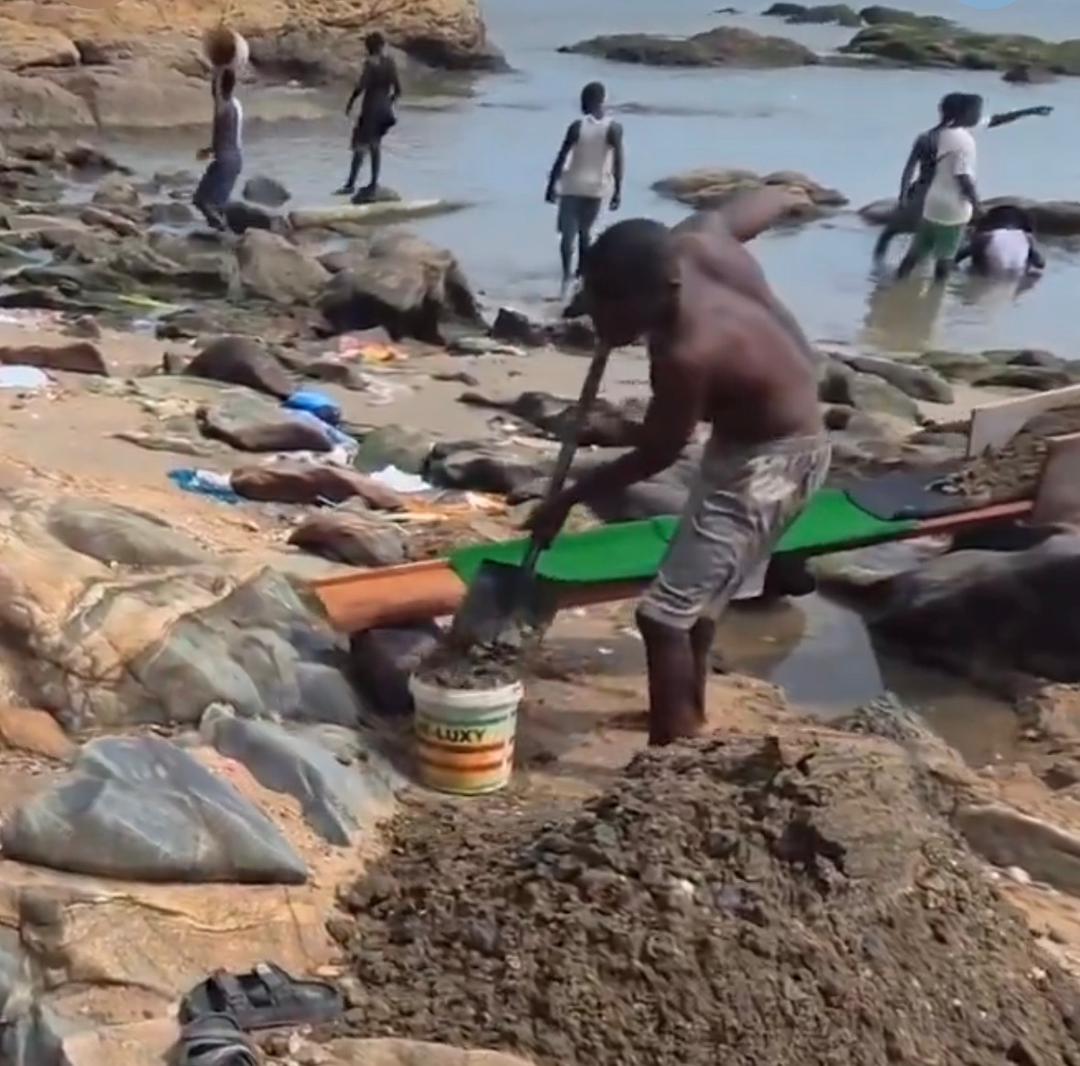
A viral video circulating on social media has captured the extension of illegal small-scale gold mining, locally known as galamsey, to the rocky shores of Cape Coast in Ghana’s Central Region.
In the footage, a local man guides a foreigner through an active beach mining site where workers use shovels and basic sluice boxes to process sediments along the shoreline. The presenter proudly displays small gold flakes collected in a bottle cap, declaring, “That’s real gold,” while claiming that miners at the site earn approximately $100 per day.
The operation appears informal, with participants working directly on the beach, sifting through sand and gravel believed to contain alluvial gold particles washed down from inland rivers over time.
Economic Drivers Amid Government Crackdowns
Ghana, long known as the Gold Coast, remains Africa’s leading gold producer, but galamsey — unlicensed and often unregulated artisanal mining — has become a persistent challenge. High global gold prices continue to attract thousands of Ghanaians to the sector, especially in areas with limited formal employment opportunities.
While official data shows the artisanal and small-scale mining (ASM) sector can be lucrative, daily earnings claims like $100 (roughly GH¢1,500–1,600 at current exchange rates) are often exaggerated or apply only to successful days. Many miners earn far less after costs for tools, fuel, and mercury-based processing. Still, the activity provides income for an estimated 1–1.5 million people nationwide, far outpacing salaries in sectors like teaching or nursing.
Commenters on the original post expressed shock that the practice has now reached Cape Coast beaches, with some questioning the long-term sustainability and others lamenting the environmental risks.
Environmental and Health Concerns
Beach and coastal galamsey adds to growing worries about marine and estuarine pollution. Studies have documented elevated levels of mercury and lead in areas affected by artisanal gold mining, including estuaries near the Central and Western Regions. These toxins, commonly used in gold extraction, contaminate water, sediments, and fish, posing risks to coastal communities that rely on fishing and tourism.
The government has repeatedly launched crackdowns on illegal mining, including military operations and bans on certain activities. However, enforcement remains difficult due to the decentralized and mobile nature of operations, as well as the economic desperation driving participation.
Recent reforms aim to formalize the ASM sector, with plans to channel more gold into official channels through the Ghana Gold Board and partnerships for responsible refining. Officials hope this will reduce smuggling, boost state revenue, and minimize environmental damage.
Broader Implications
The video highlights a troubling trend: as inland galamsey faces pressure, operations are shifting to new frontiers, including coastal zones previously untouched by large-scale mining. Environmentalists warn that unchecked beach mining could accelerate coastal erosion, degrade marine habitats, and affect tourism in historic areas like Cape Coast and Elmina.
Local reactions on social media ranged from concern (“Galamsey now in Cape Coast — we have a long way to go”) to skepticism about the gold’s quality or origin, with some suggesting the flakes could be from historical shipwrecks or river deposits rather than fresh seabed mining.
Authorities have not yet issued an official statement on this specific site, but the spread of galamsey to sensitive coastal ecosystems is likely to intensify calls for stronger regulation and alternative livelihood programs.
🇬🇭 “That’s real gold.”
— A moment a foreigner was introduced to a galamsey site in Cape Coast, where people were mining gold in the sea. He was told that the miners make about $100 a day. pic.twitter.com/wIUDfuCBbc
— THE STATE NEWS (@THESTATENEWSS) April 22, 2026
