


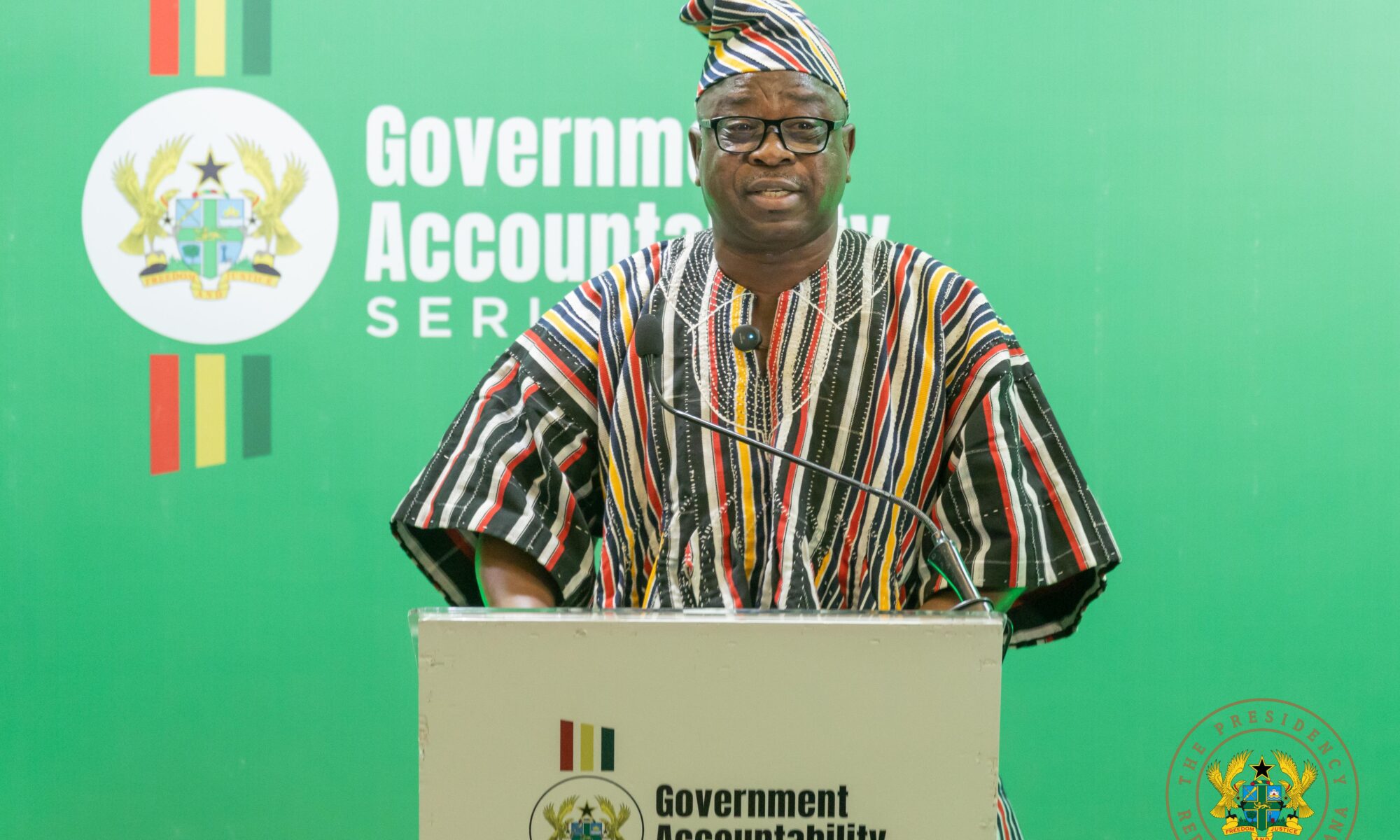
Ghana is grappling with a growing set of obstacles in its efforts to access global climate finance, including declining grant-based funding, slow and complex accreditation processes for major climate funds, limited technical capacity in carbon markets and a heavy reliance on loan-based financing that raises serious debt sustainability concerns, the Minister of State for Climate Change and Sustainability has disclosed.
Seidu Issifu made the candid assessment at the Government Accountability Series held at the Presidency on Wednesday, May 6, saying the challenges underscored the urgency of institutional reform and innovation in how Ghana approached and managed climate financing.
“There is growing global donor fatigue, with declining levels of grant-based climate finance and increasing competition among countries for limited concessional resources. This places additional pressure on countries like Ghana to position themselves more strategically and competitively,” he said.
On accreditation, the minister said slow and complex processes for accessing major mechanisms such as the Green Climate Fund and the Adaptation Fund required significant institutional readiness, compliance systems and technical documentation that could delay access to much-needed financing at a time when climate impacts were already being felt across the country.
He also pointed to limited technical capacity in carbon markets, particularly in project development, measurement, reporting and verification systems, as a constraint on Ghana’s ability to fully participate in and benefit from emerging carbon market opportunities.
On debt, the minister said the heavy reliance on loan-based climate finance raised concerns around fiscal pressure for climate-vulnerable countries and called for a decisive shift toward more grant-based and concessional financing instruments.
“For climate-vulnerable countries, there is a strong need to shift toward more grant-based and concessional financing instruments,” he said, adding that Ghana had consistently advocated for this position at international forums including COP30 in Belém, the 80th Session of the United Nations General Assembly and the IMF and World Bank CVF-V20 Annual Meeting.
The minister said the realities of the current climate finance landscape reinforced the need to build stronger institutions, develop new financing models and position Ghana not only to access climate finance but to deploy it effectively in support of national development priorities.
