


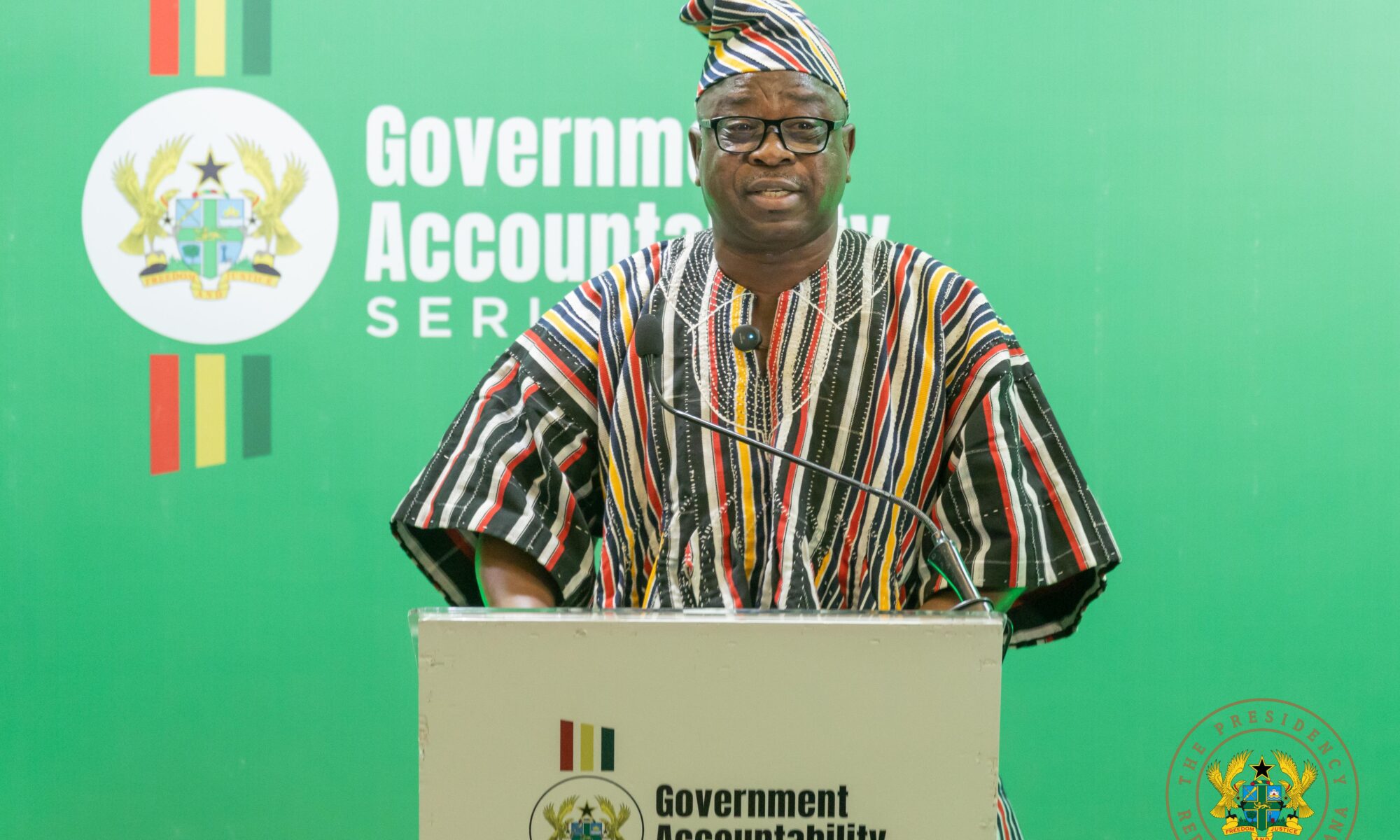
Ghana has signed ten non-binding cooperative agreements with strategic international institutions covering climate finance mobilization, renewable energy development, carbon market development and climate-resilient agriculture, as the country moves aggressively to position itself as a credible destination for global climate investment.
The Minister of State for Climate Change and Sustainability, Seidu Issifu, disclosed the agreements at the Government Accountability Series held at the Presidency on Wednesday, May 6, outlining a year of work his office had undertaken to transform Ghana’s climate engagement from a fragmented and reactive posture into a coordinated, investment-driven and internationally integrated governance framework.
“We are established to align national efforts, unlock strategic partnerships, mobilise climate finance at scale, and ensure that Ghana’s climate agenda drives our economic transformation,” he said.
The minister also disclosed that he had been appointed as a Board Member of the Climate Vulnerable Forum and Vulnerable Twenty Group, a coalition of more than 74 developing countries highly vulnerable to climate change, describing the appointment as a further reinforcement of Ghana’s contribution to global discussions on climate finance reform.
The ten cooperative agreements, he said, covered priority areas including Environmental, Social and Governance compliance, sustainable infrastructure, carbon market development and climate-resilient industrial development, and were designed to provide a foundation for translating policy commitments into concrete programmes, projects and investments.
The Office had also facilitated structured engagement between the Climate Vulnerable Forum and key national institutions including the Ghana Infrastructure Investment Fund, Consolidated Bank Ghana, the Ghana Investment Promotion Centre and the National Investment Bank, presenting a pipeline of priority climate investment opportunities across renewable energy, climate-resilient infrastructure, sustainable agriculture and early warning systems to the CVF Secretariat for sharing with international financing partners.
The minister said climate change was no longer simply an environmental issue but a national development challenge that directly affected Ghana’s economy, infrastructure, water security, food systems and energy transition.
“Climate action is not charity. It is a strategy. It is an investment in Ghana’s future stability, resilience, and prosperity,” he said.
