


Ghana is embedding climate considerations directly into its 24-hour economy programme and Big Push infrastructure agenda, as the Office of the Minister of State for Climate Change and Sustainability works to ensure that the country’s energy transition creates new economic opportunities rather than constraining national development ambitions.
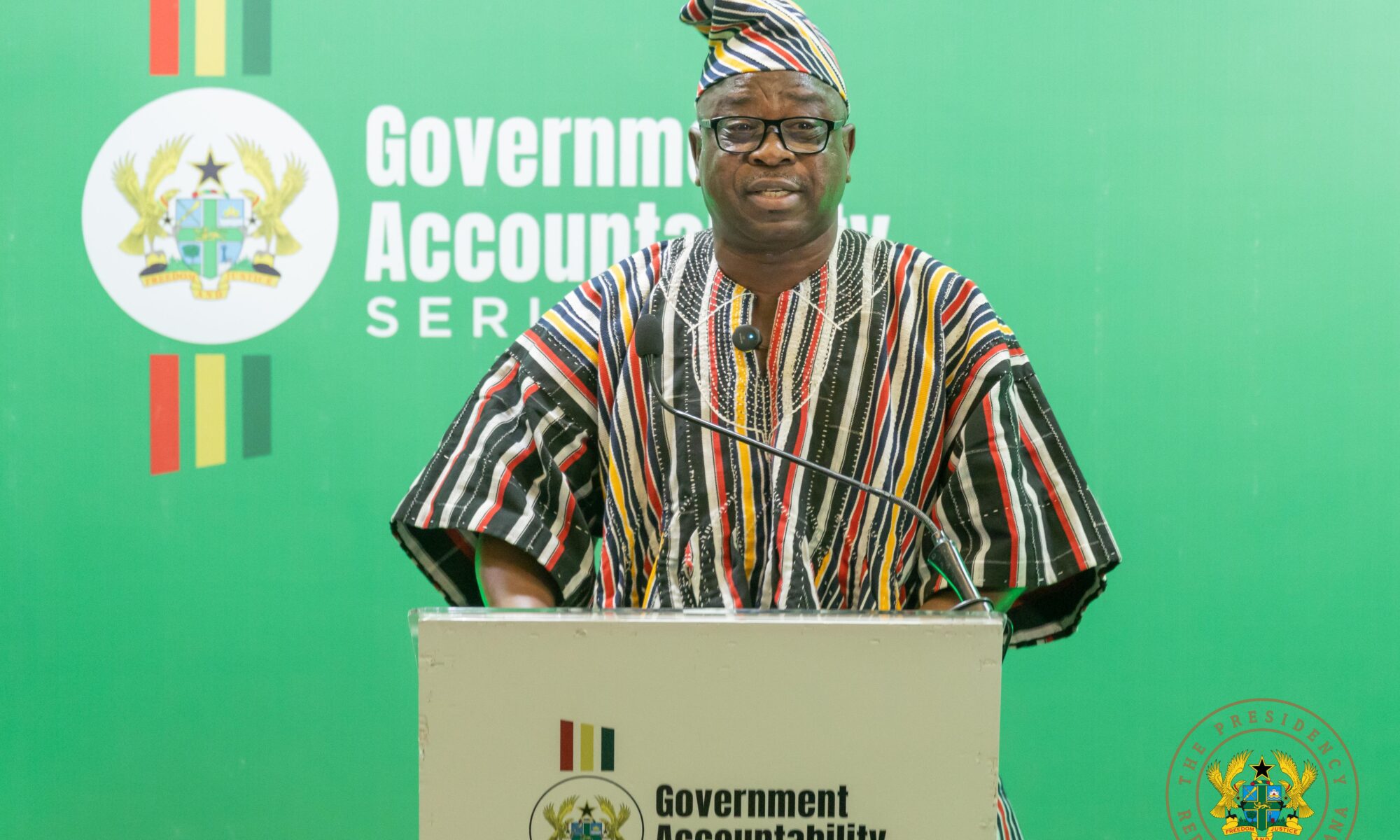
Minister of State for Climate Change and Sustainability Seidu Issifu outlined the integration agenda at the Government Accountability Series held at the Presidency on Wednesday, May 6, saying the office’s approach was anchored on the principle that climate action had to support Ghana’s reset agenda and industrial transformation rather than work against it.
“Climate action must support Ghana’s Reset Agenda and industrial transformation, create new economic opportunities, and strengthen long-term energy security. It must power development rather than slow it down,” he said.
The minister said the office was supporting efforts to expand solar rooftop deployment and distributed renewable energy systems, promote the development of green industrial zones, advance climate-aligned infrastructure development and accelerate electric mobility through strengthened technology transfer partnerships.
He said the office had also convened an inaugural Inter-Ministerial and Agency Technical Working Group on May 30 2025, bringing together ministries, agencies, financial institutions, the private sector, civil society and development partners to align sectoral policies with national climate priorities, identify collaboration opportunities and recommend scalable and bankable climate projects.
The working group, which now met regularly, was central to the office’s effort to break down the silos that had previously constrained Ghana’s climate governance architecture and ensure that climate action was embedded across every sector of the economy from energy and agriculture to health, infrastructure and finance.
Looking ahead, the minister said the office’s 2026 priorities included advancing the accreditation of national entities to access climate funds, intensifying the development pipeline of bankable climate projects, deepening Ghana’s carbon market participation and scaling up renewable energy and climate-resilient infrastructure.
He said Ghana’s long-term objective was to be not merely a recipient of climate support but a proactive partner shaping solutions and advancing sustainable development on the continent.
“Ghana is not simply a recipient of climate support, but a proactive partner shaping solutions and advancing sustainable development,” he said.
